The Fabric of Life
Origin
I trained and worked for fourteen years at the top of the fashion industry, and for most of that time I asked only whether a thing was beautiful, boundary-breaking, visually exciting. Then I had my daughter, and I felt that question rewiring itself overnight, the excitement of invention giving way to a fierce, singular need to protect her.
Initial Impact
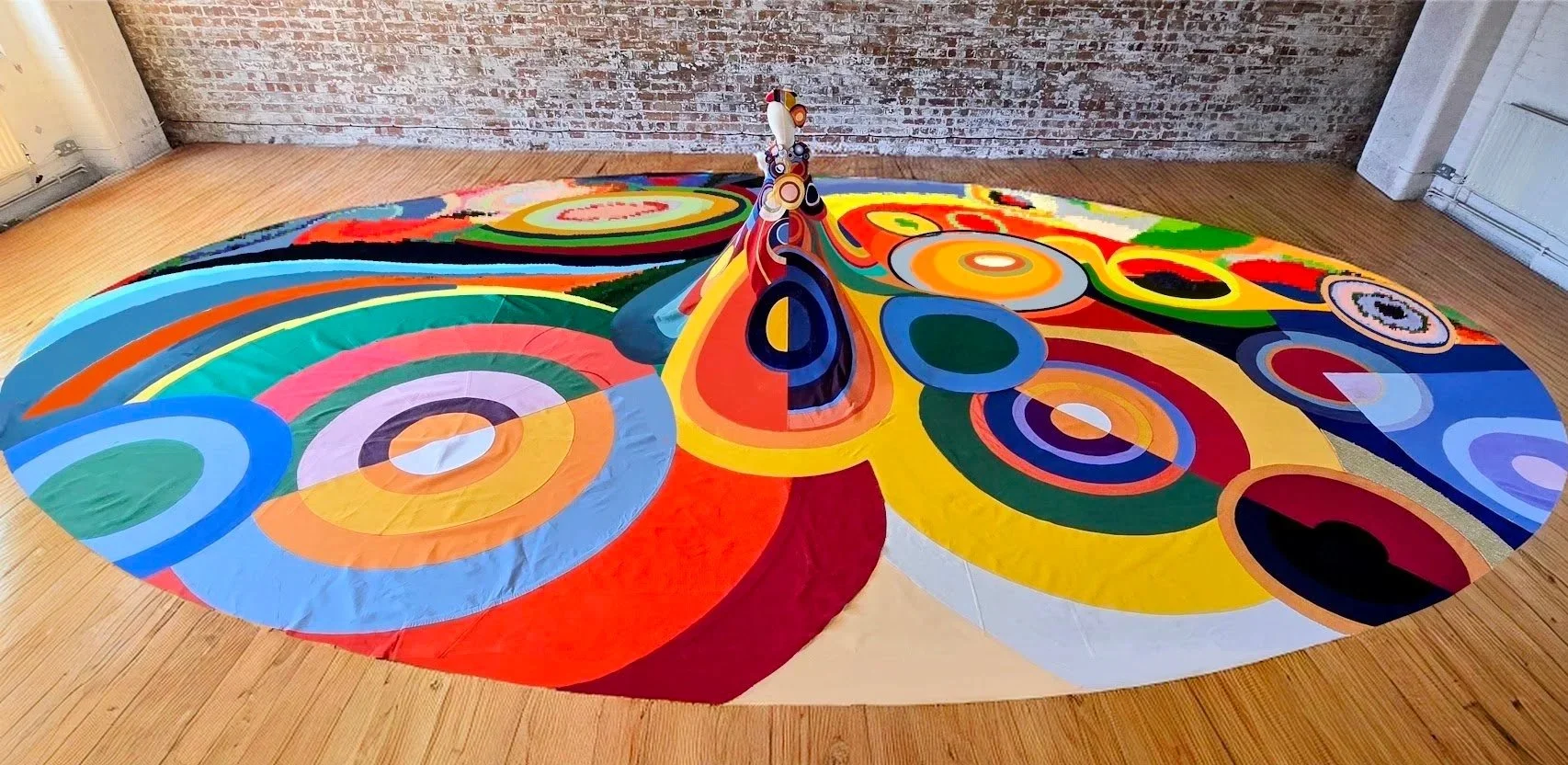
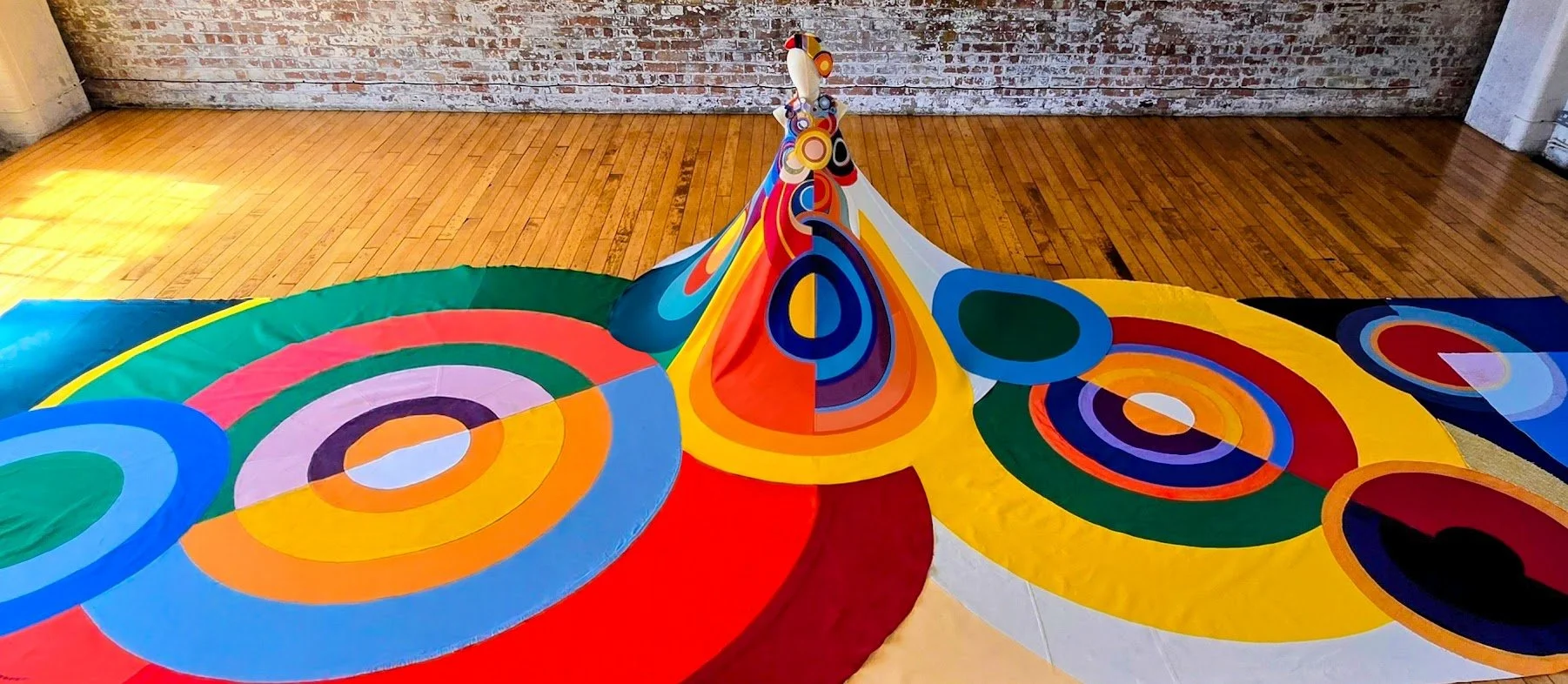
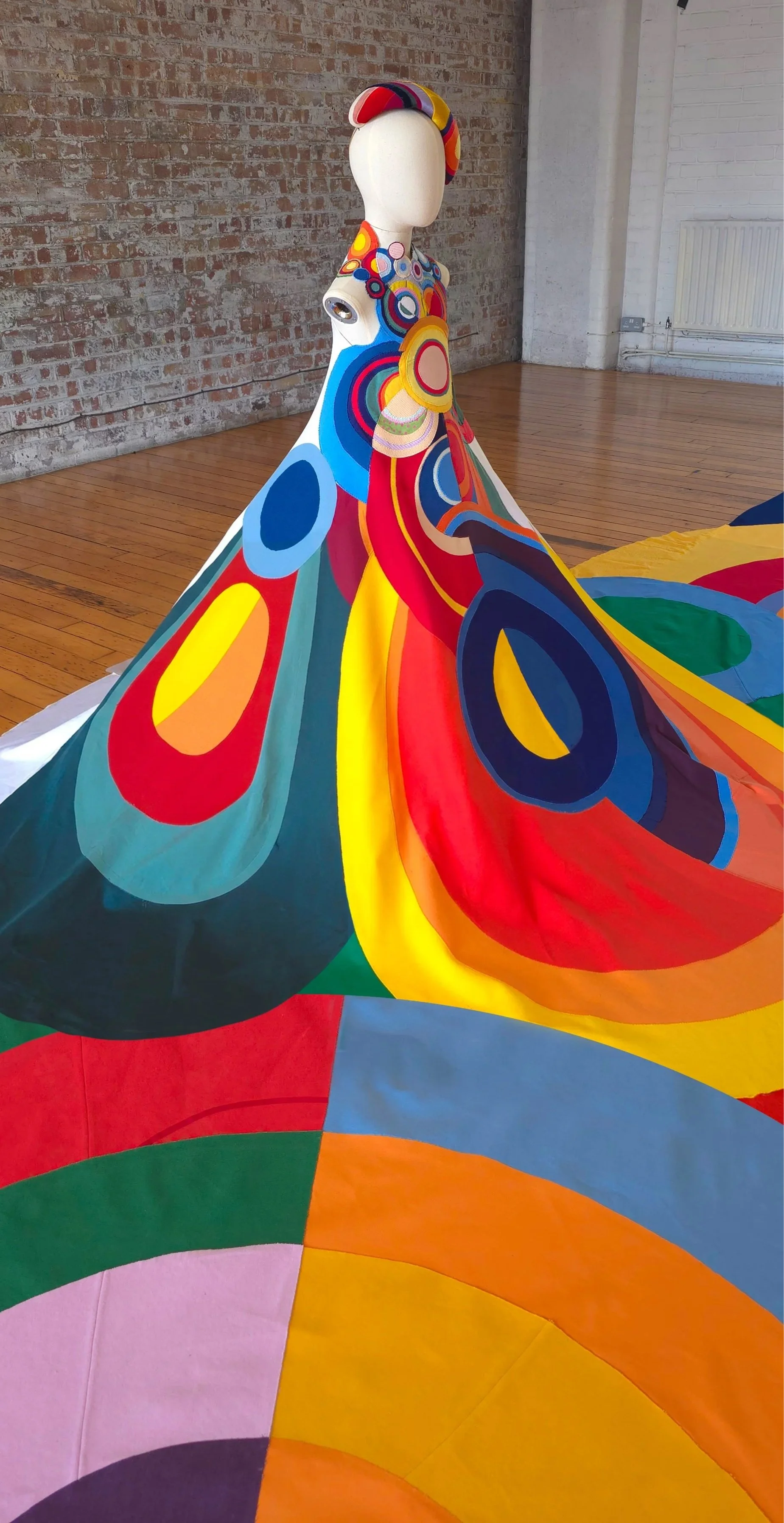
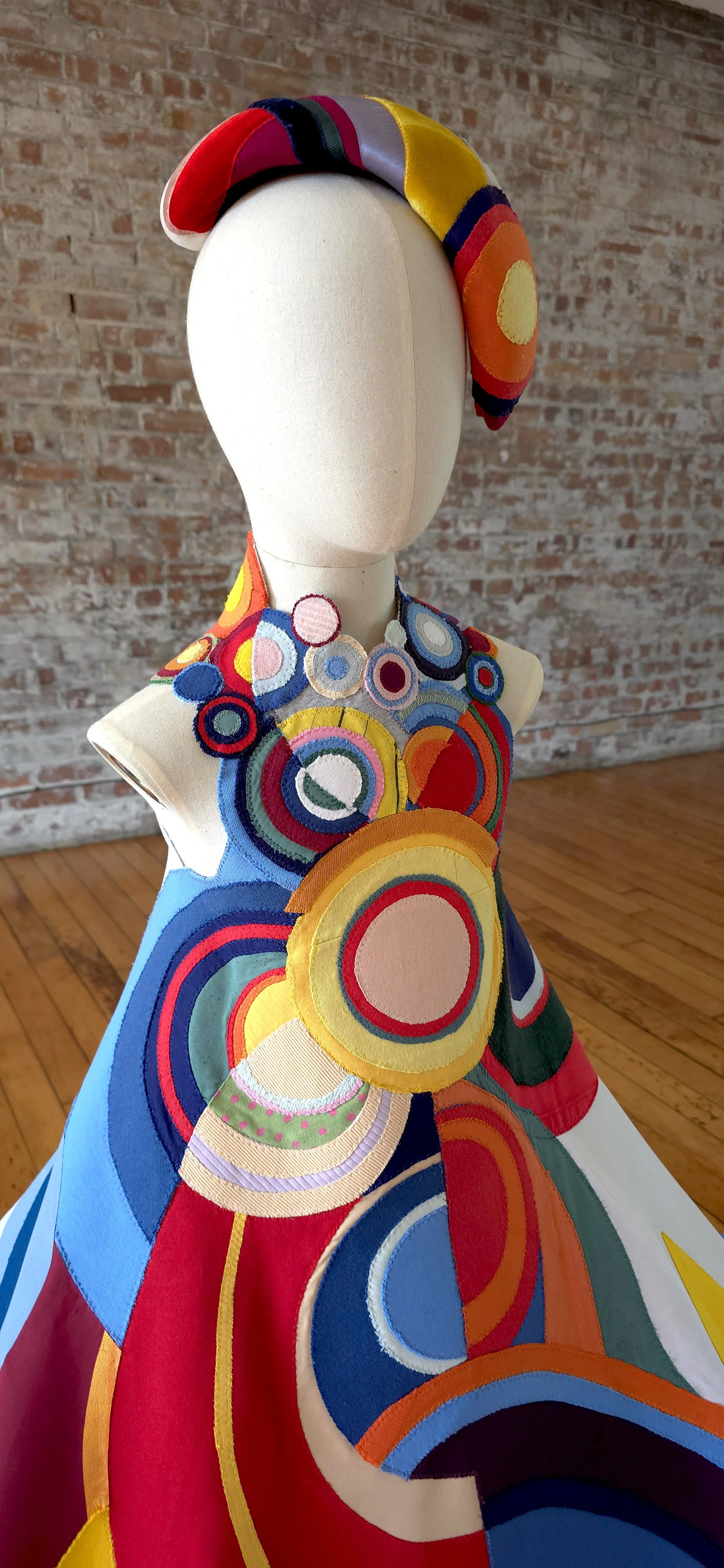
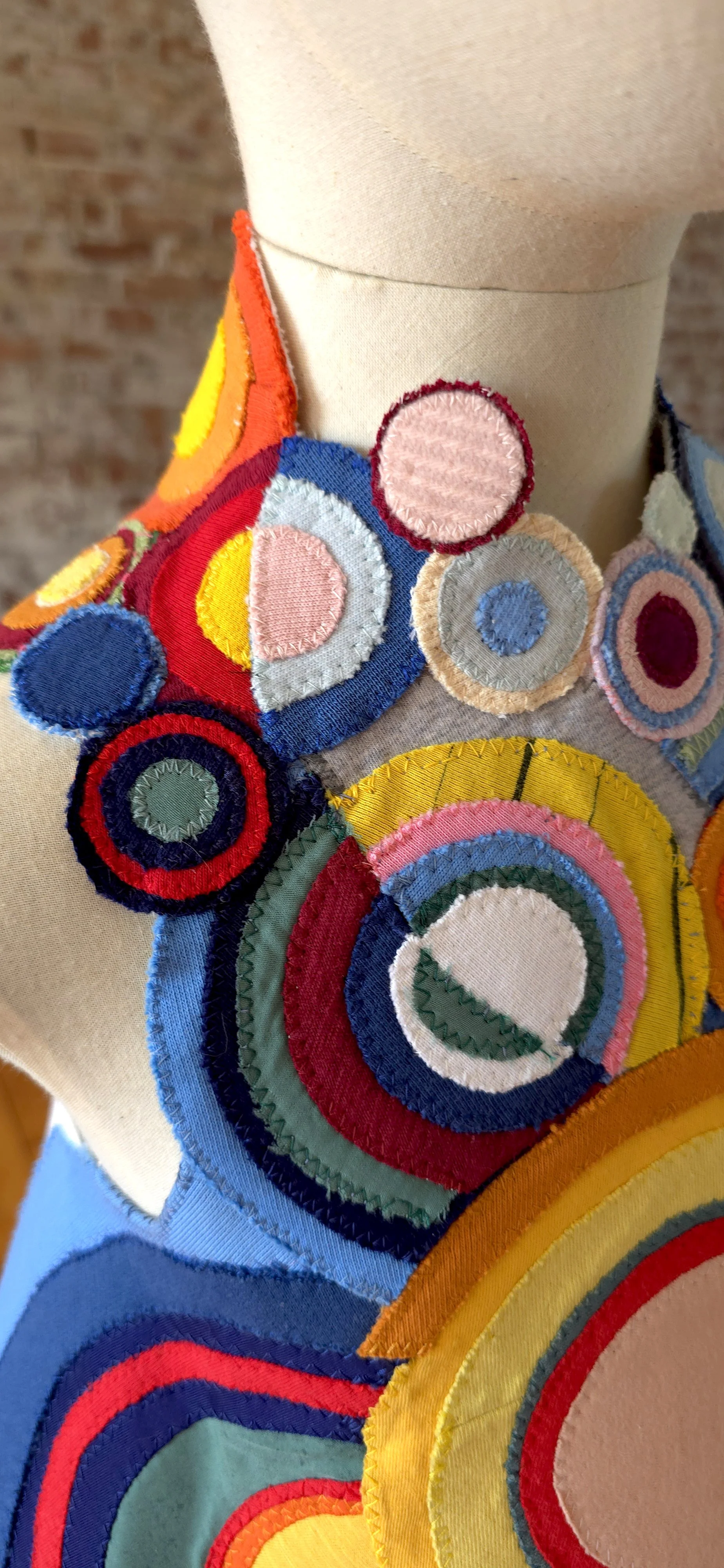
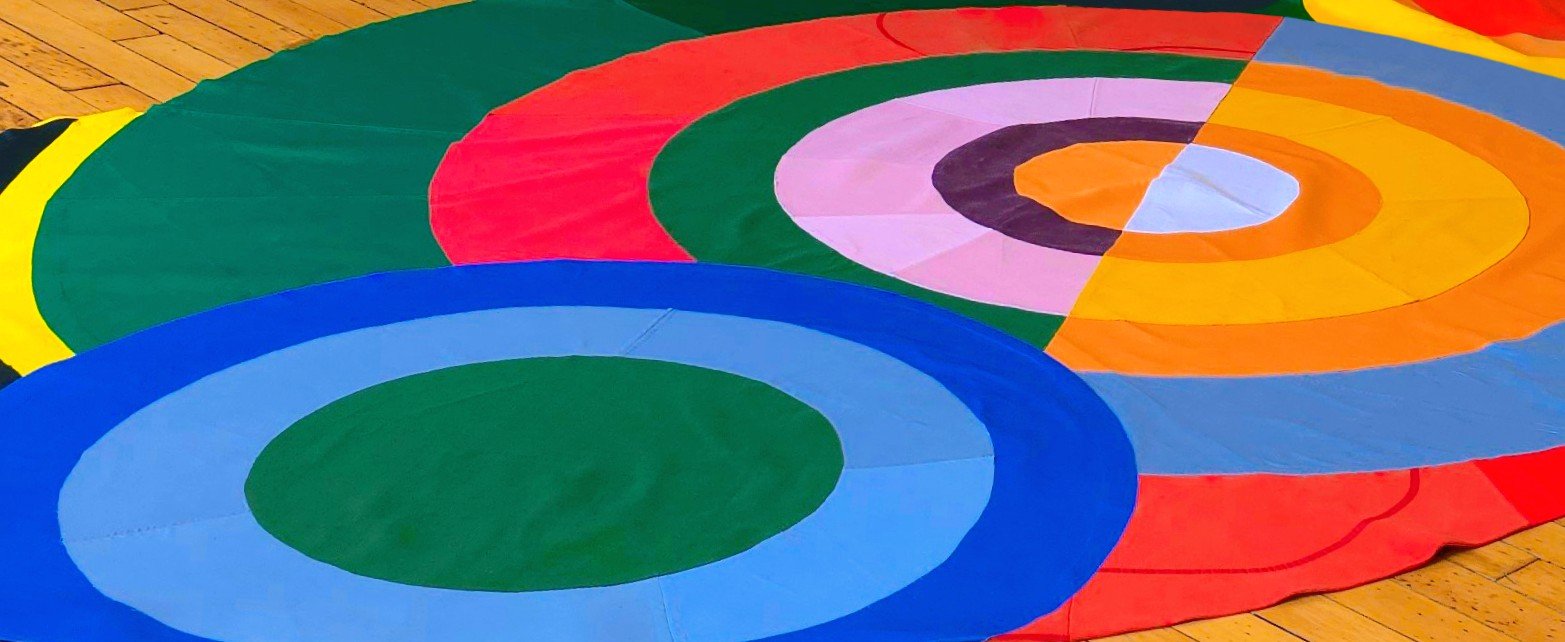
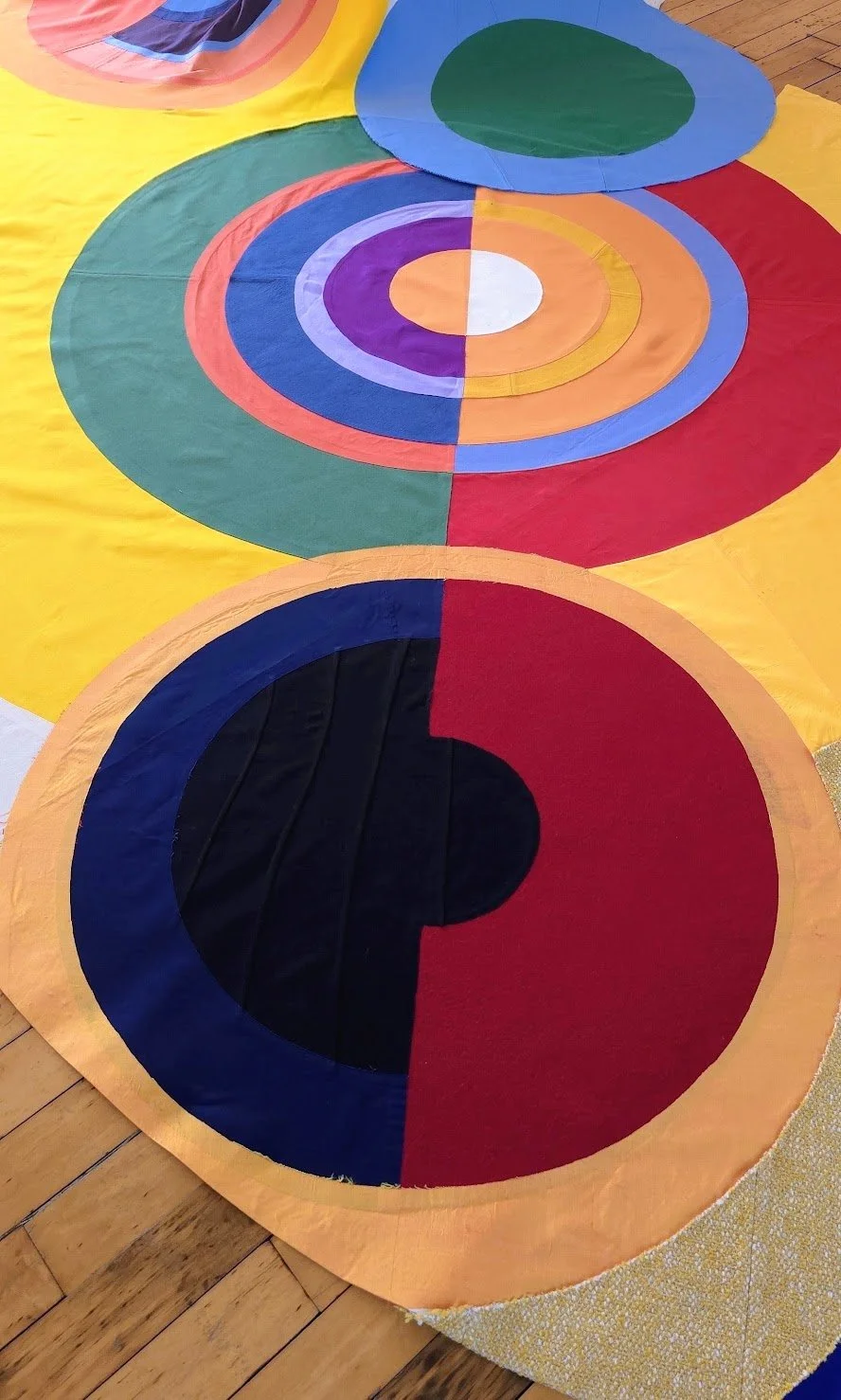
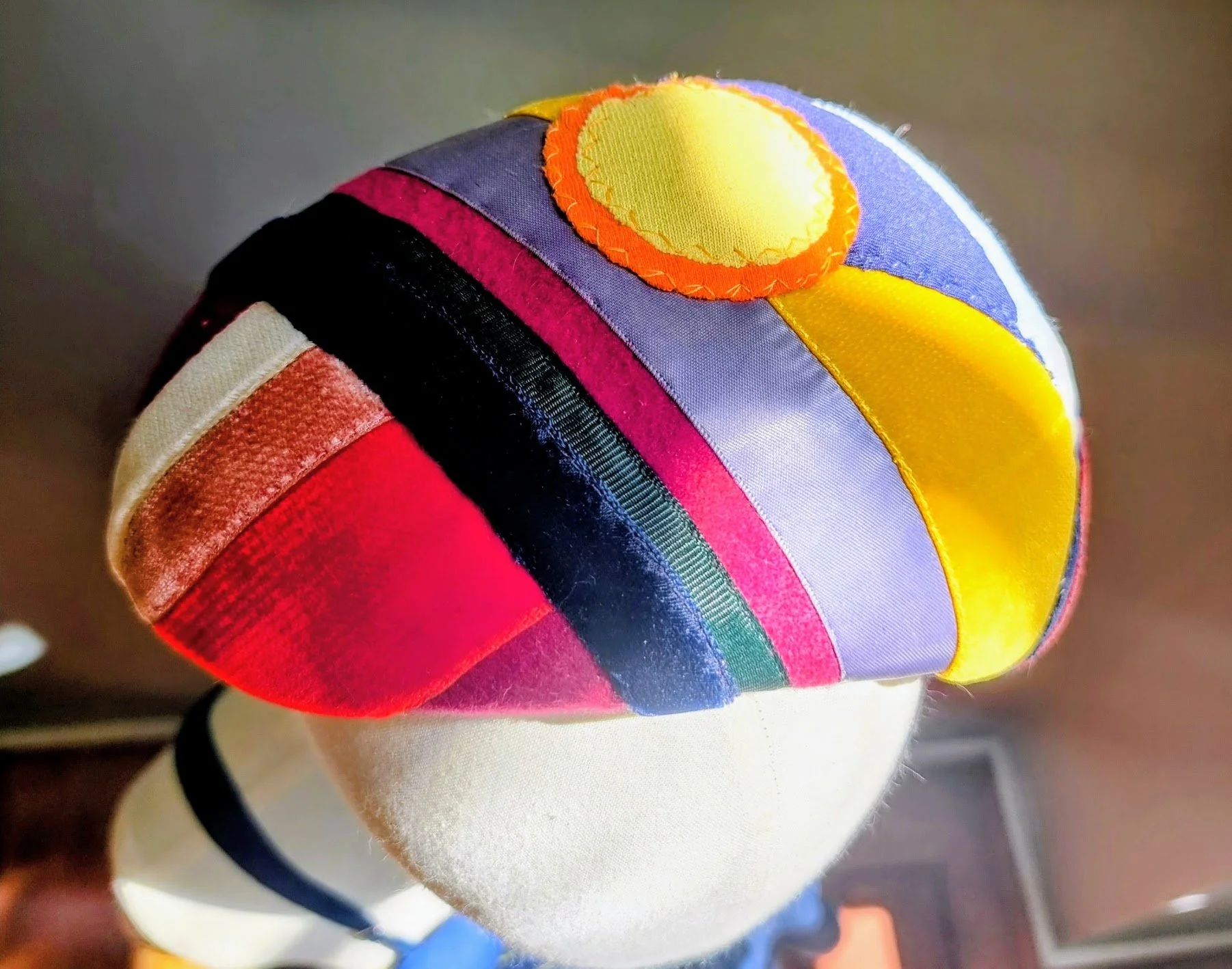
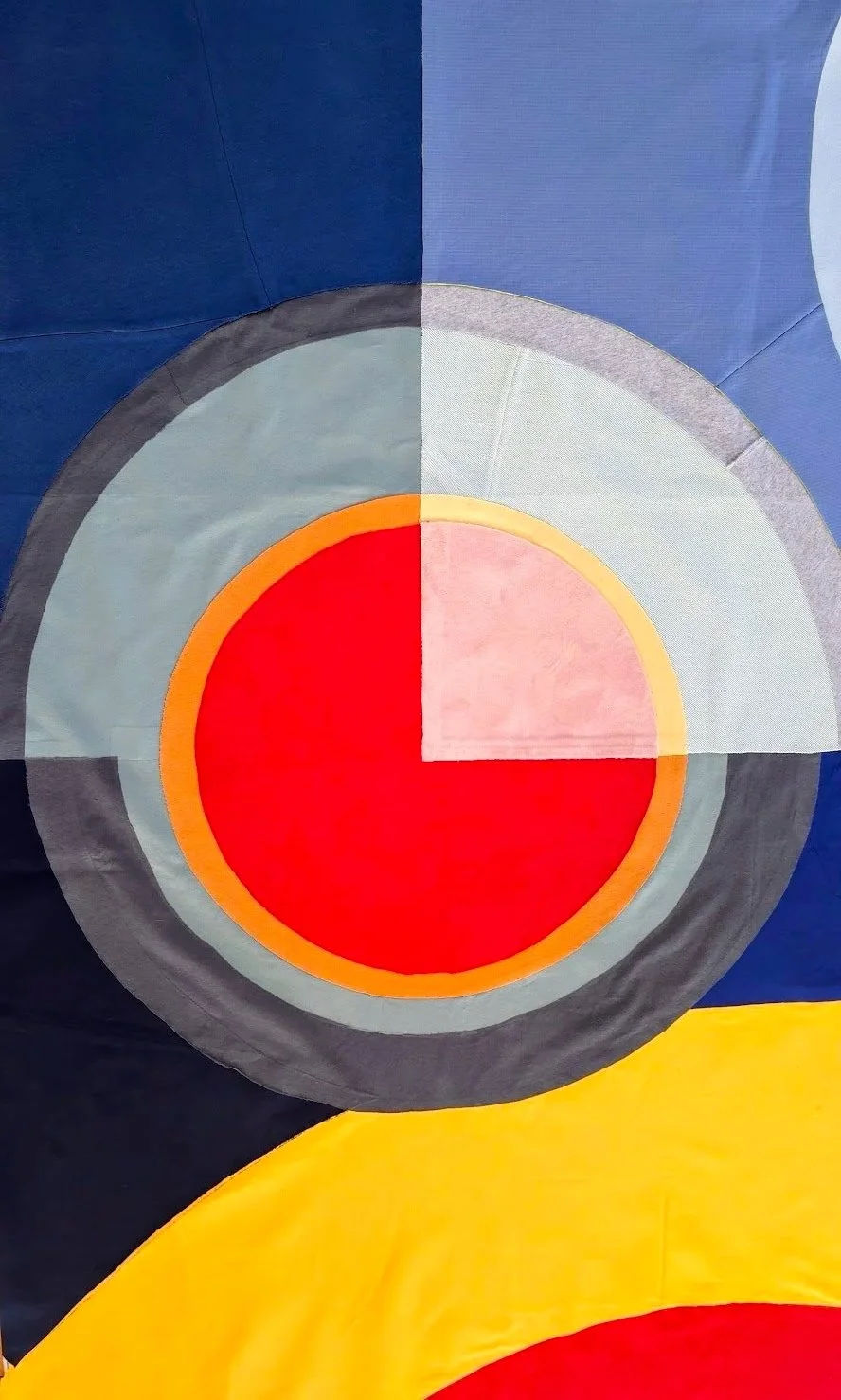
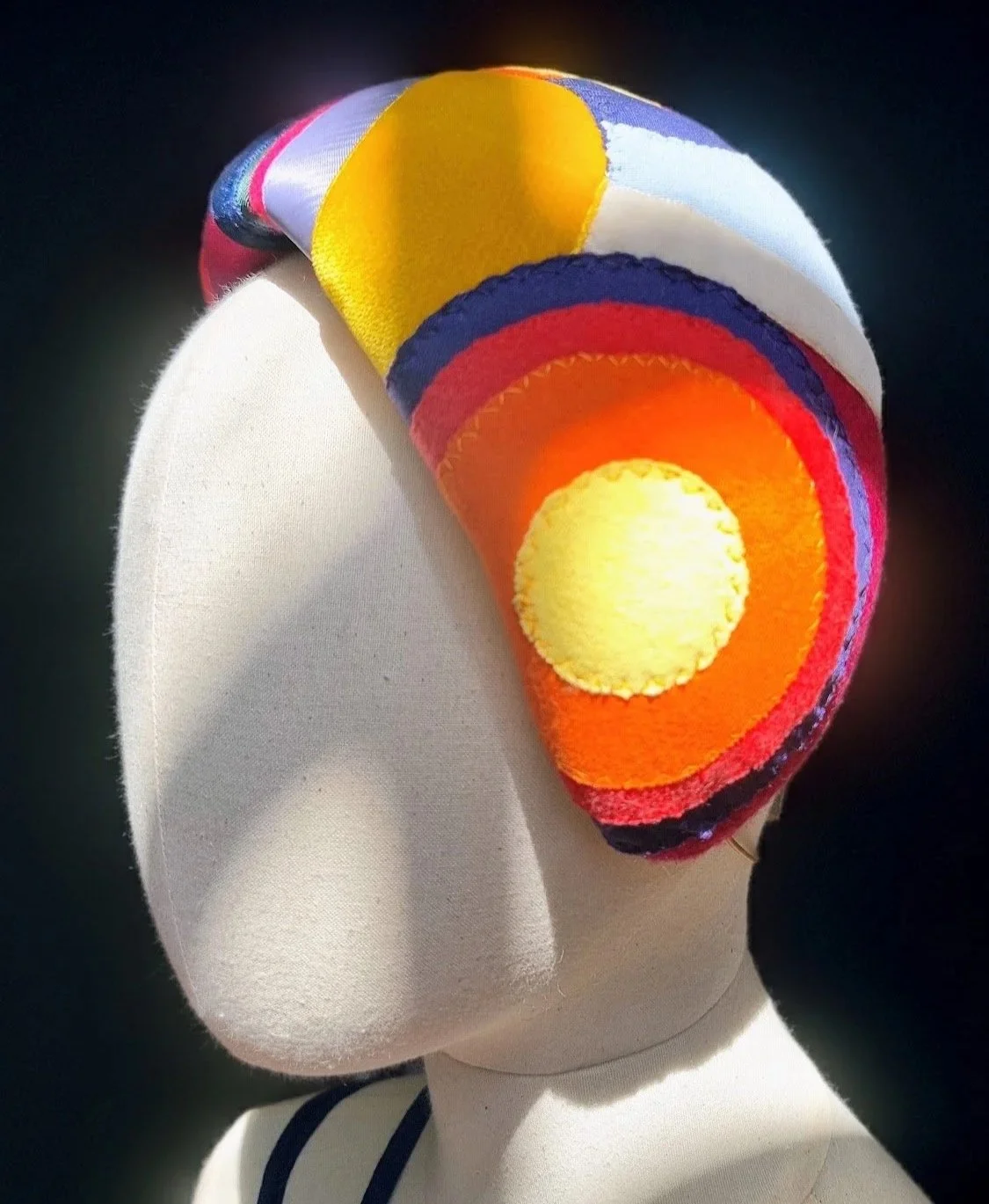
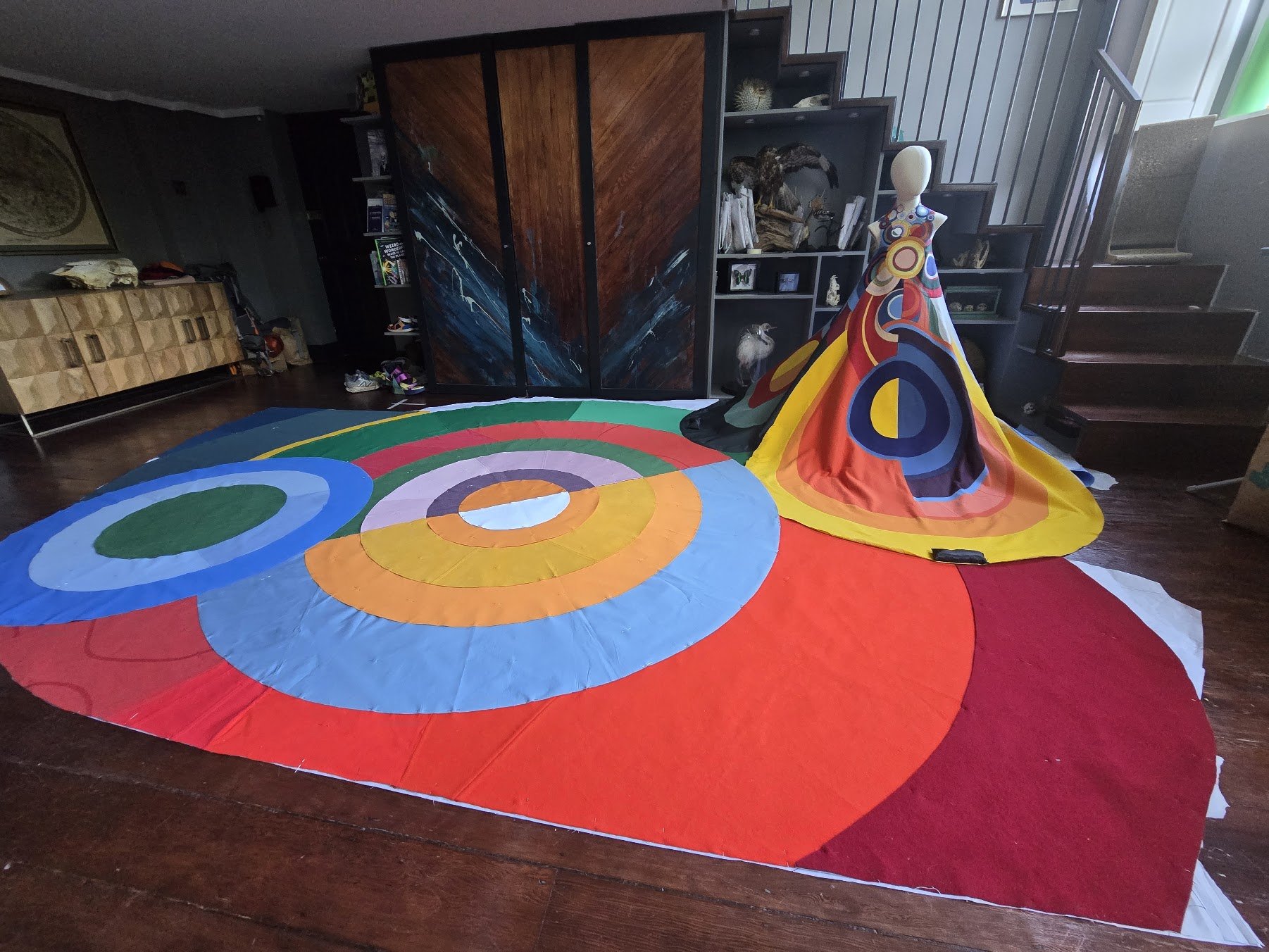
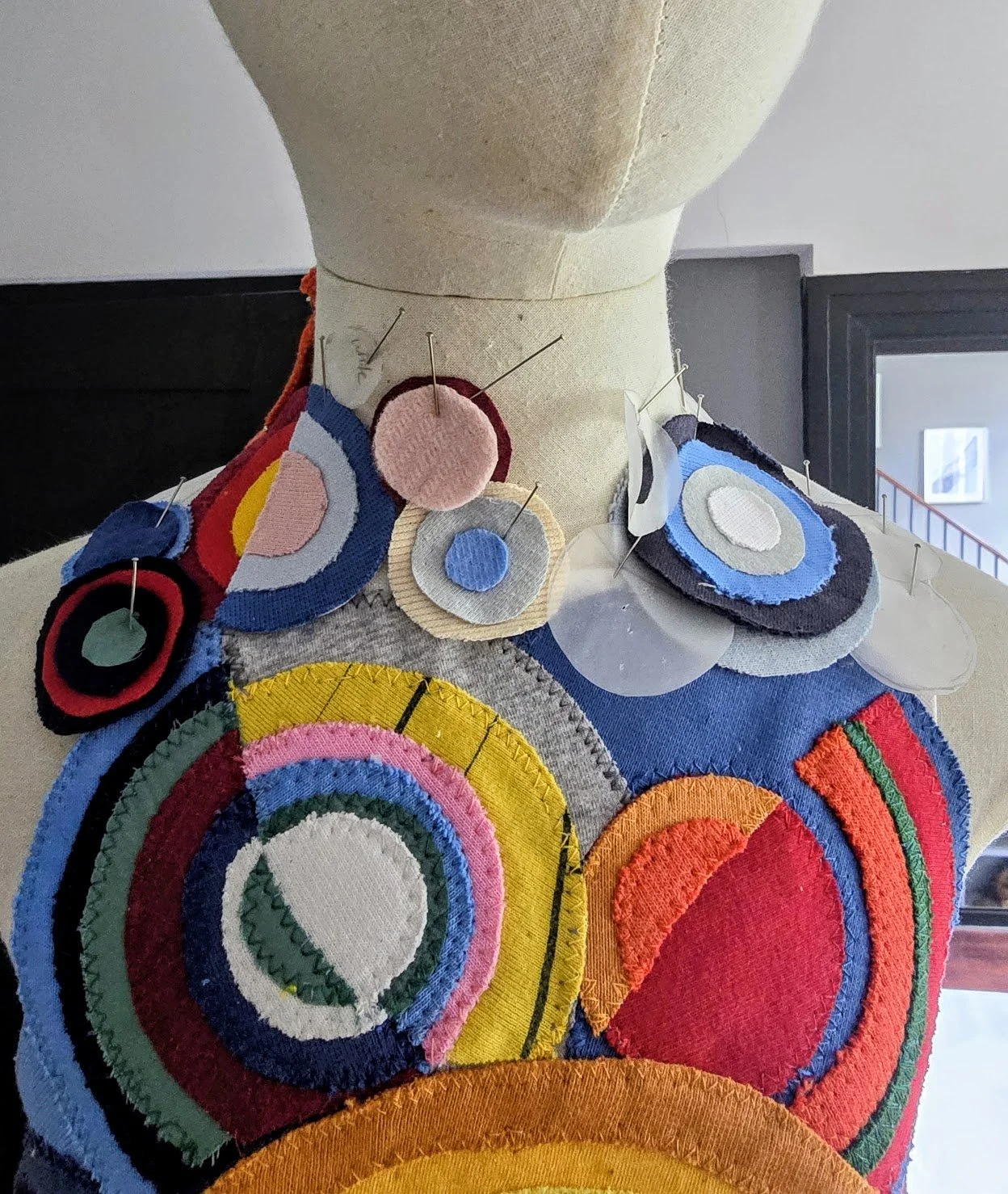
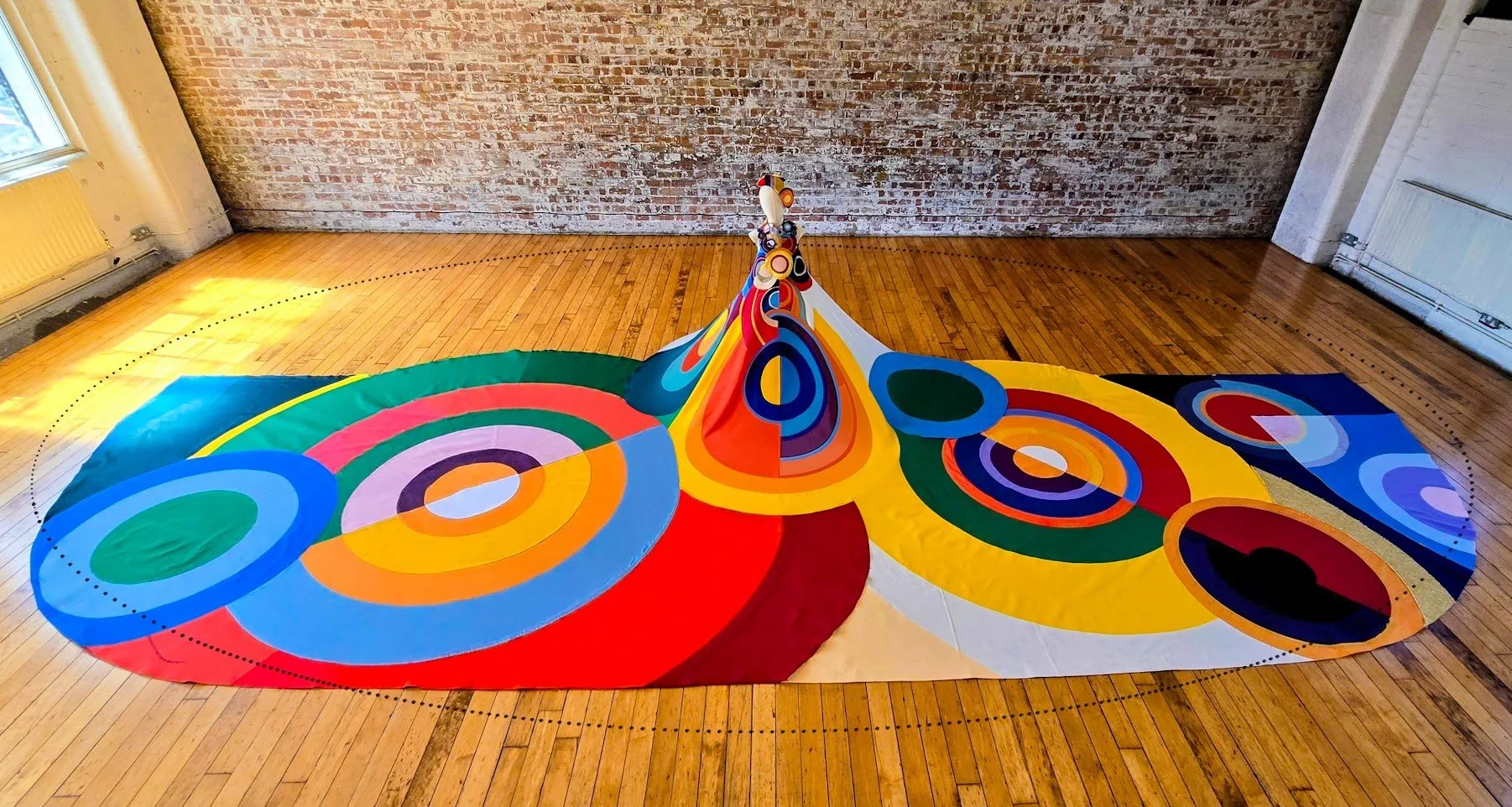
At first glance, Fabric of Life is simply beautiful: a room-sized dress, worn by a child, overwhelming in scale, its kaleidoscope of bold colours moving through the space in harmonious rhythms. The dress’s pattern language is built on Orphism, the early-twentieth-century belief that pure colour, arranged well, can conduct a room of people through feeling the way music conducts an orchestra hall. Standing in front of the dress, you will feel that pull. It's a monument to why we're called the making ape: every generation enriches the world it will pass on, embroidering finer luxury, bolder invention, richer life into the fabric we pass onto the next generation: their inheritance.
Unconscious Anxiety
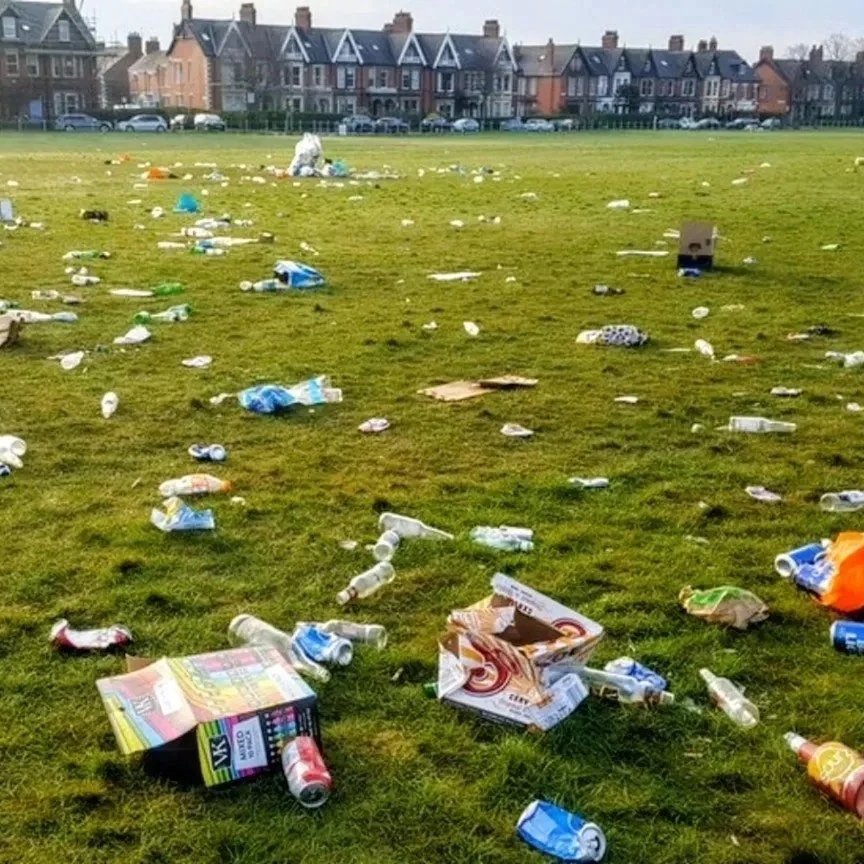
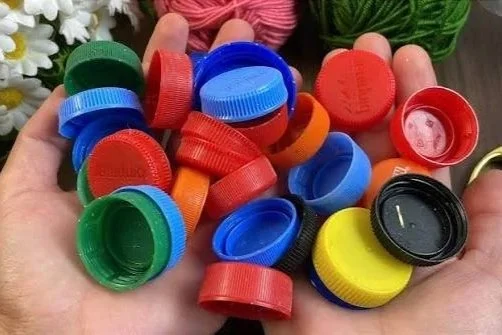
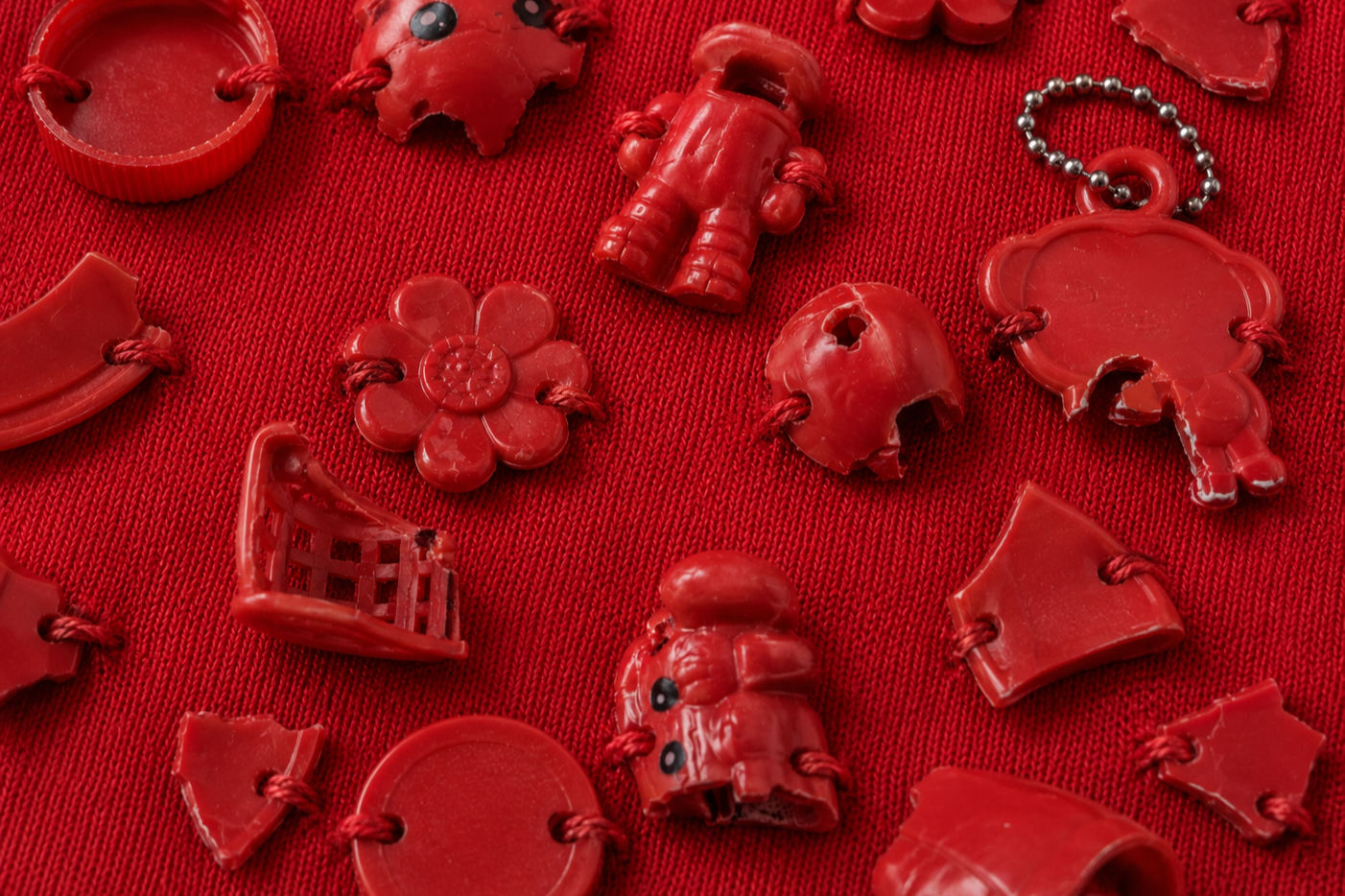
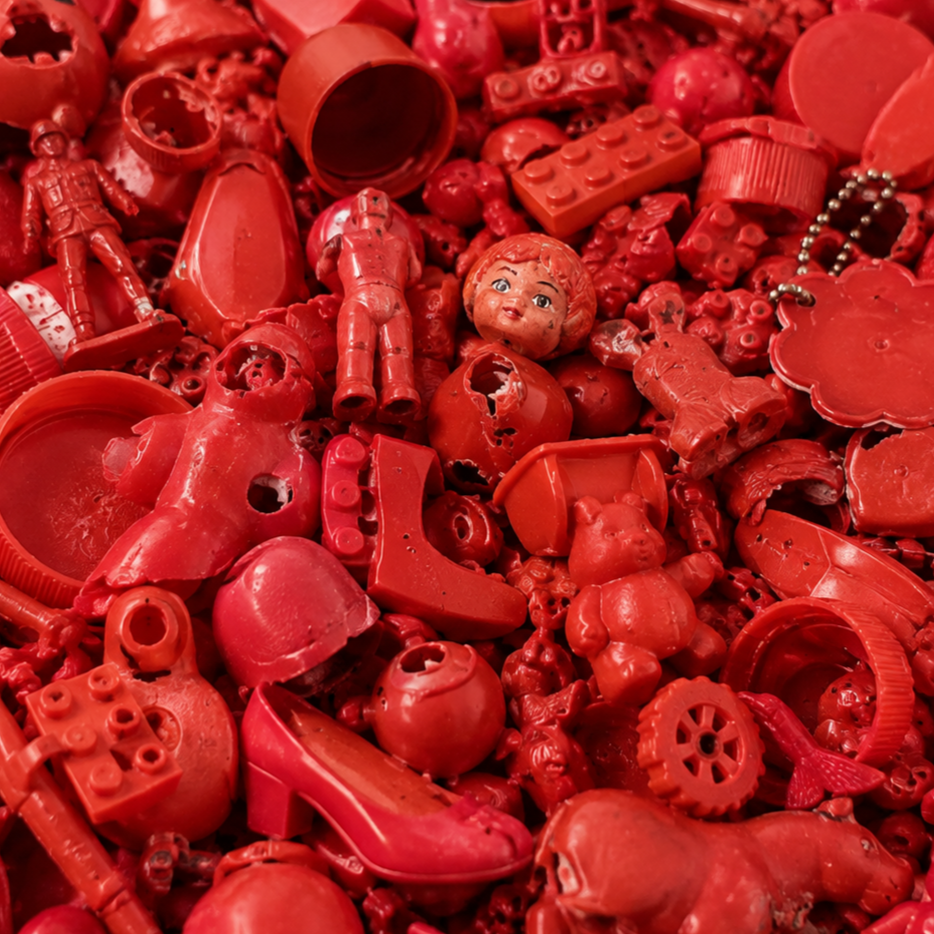
Then something starts to feel off. Around the hem, plastic detritus collects in thickening clusters at the edges. Colour-matched to whichever section of the dress they cling to: toys, bottle caps, scraps that shouldn't be beautiful but nearly are. It's meant to sit exactly where environmental anxiety sits in me, and I suspect in most of us: at the very edge of consciousness, easy to notice and easier to look past.
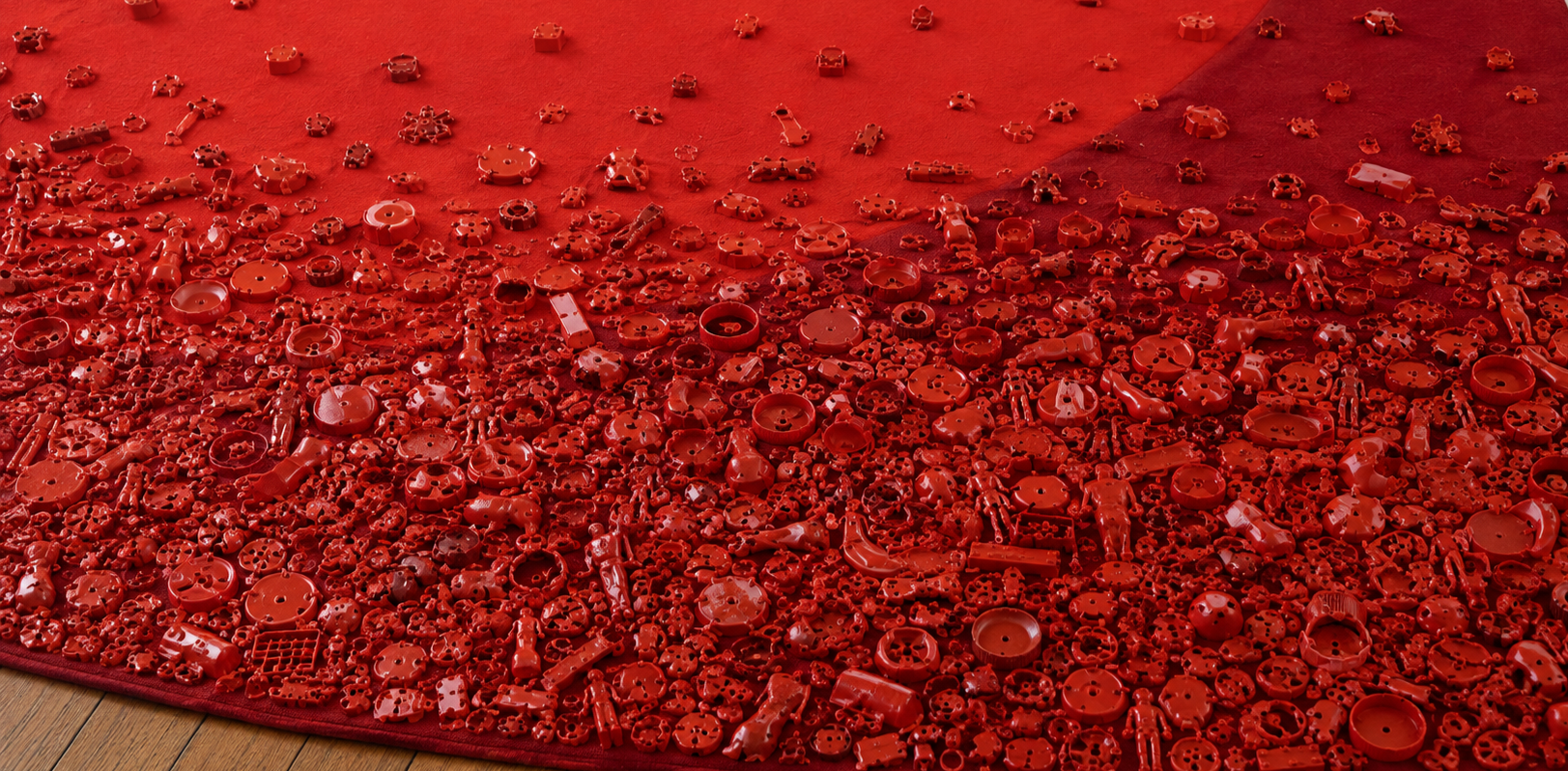
AI Render of finished rubbish embroidery
AR Reveal
To go further, the viewer scans a QR code and holds their phone up to the room. A 360-degree AR filter takes over the space: the room fills with landfill trash, toxic water rises around and up the child, fire crackles across the waste and the sound of it- wildfire, close and loud- comes through the phone. As the viewer turns, the destruction follows. Nothing in the room is spared. The child is strapped to a tomb of a dress, drenched in rising toxicity and everything catching fire; there is no escape for her.
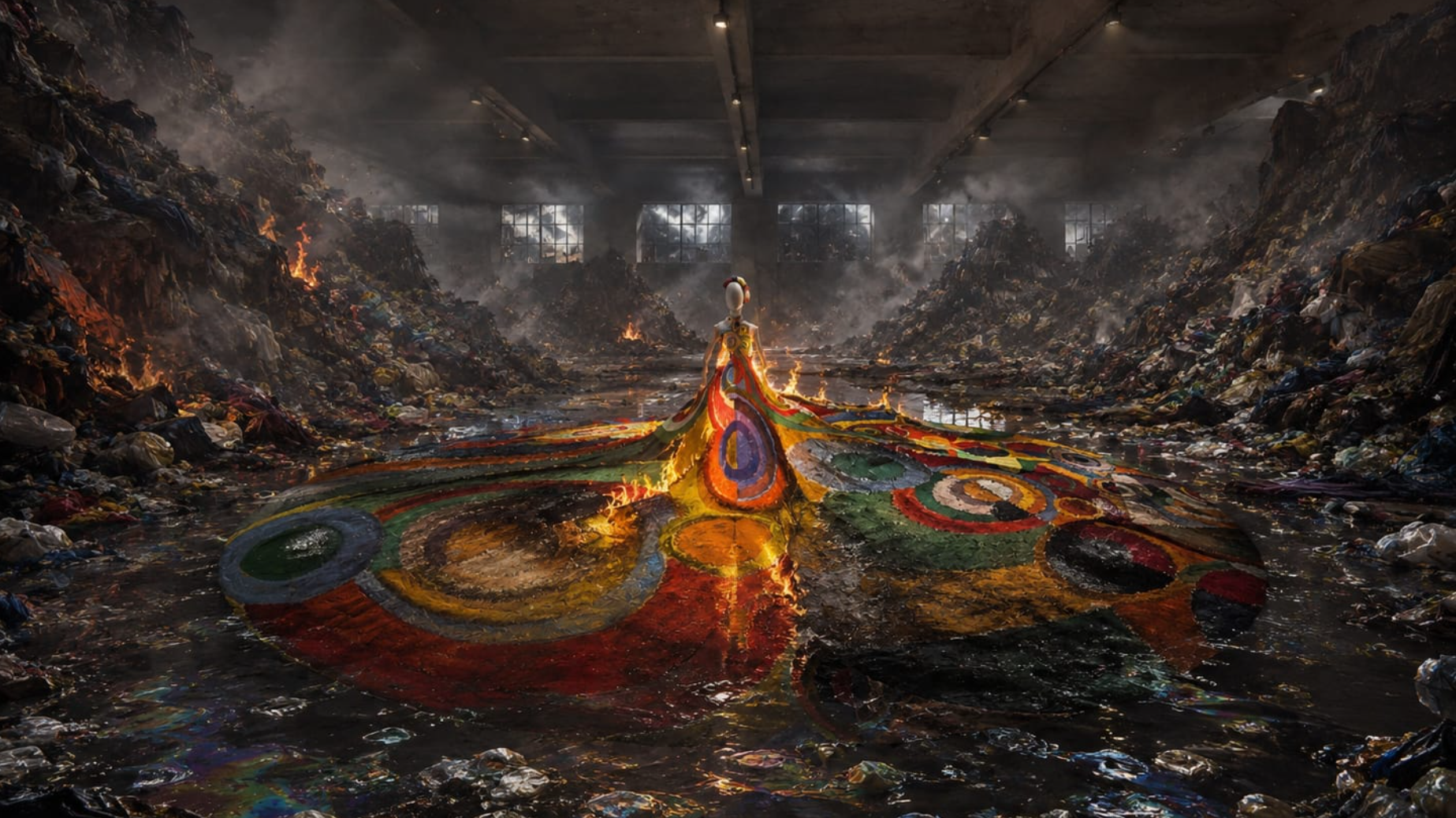
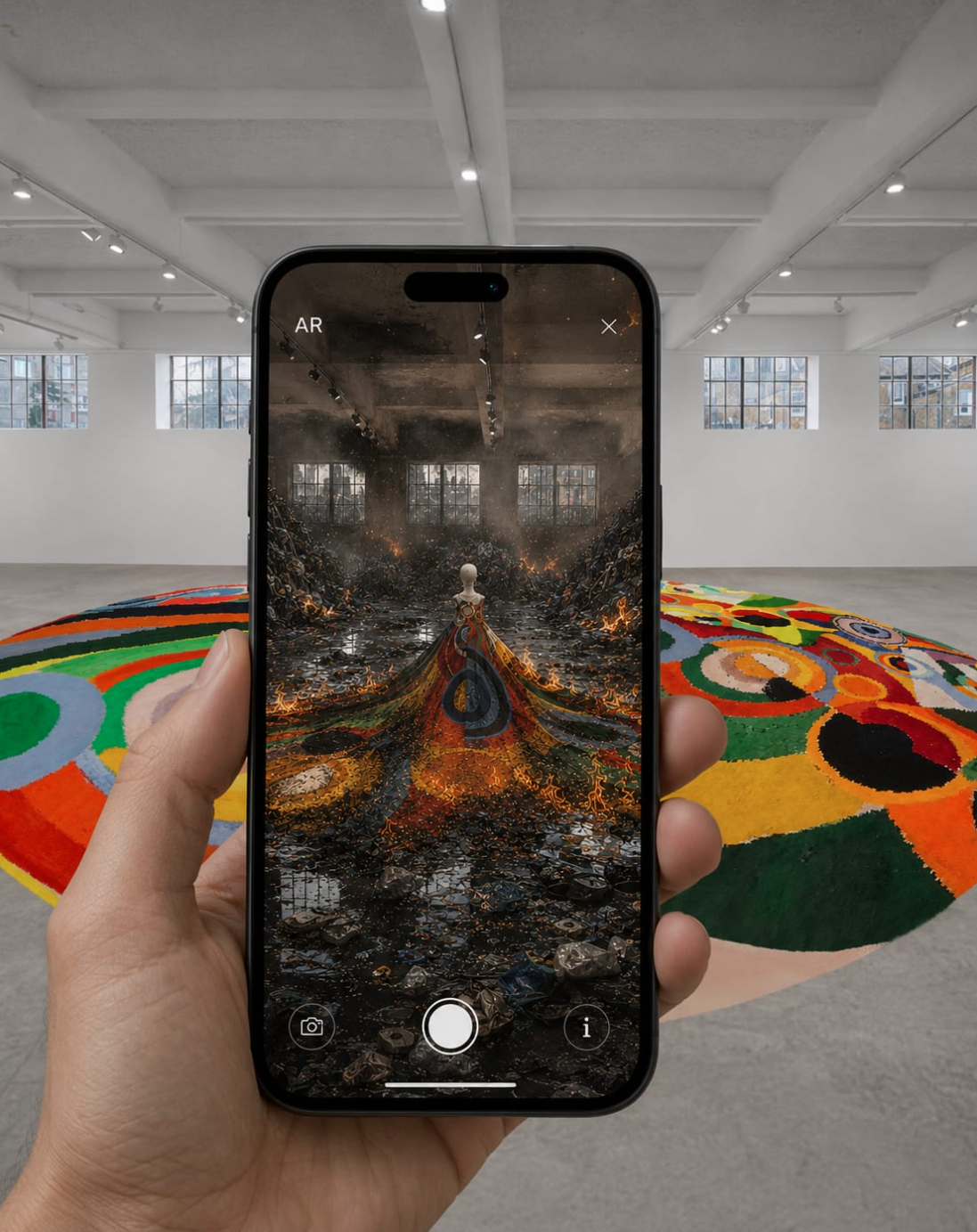
AI Render of AR phone Filter
The Heart Of It
This is the moment I'm asking people to stand in: the moment I understood what I had helped build. I love my daughter more than I have loved anything in my life, and I still, without meaning to, without even seeing it happen, wove her into a dress of death, the same way my industry did, the same way most of us do - one small convenient or unconscious choice at a time. It isn't really a story about fashion or waste. It’s a personal, primal story: a being who loves her young beyond reason, waking to find she has failed to protect her from a fate she helped bring about.
Reuse London Community
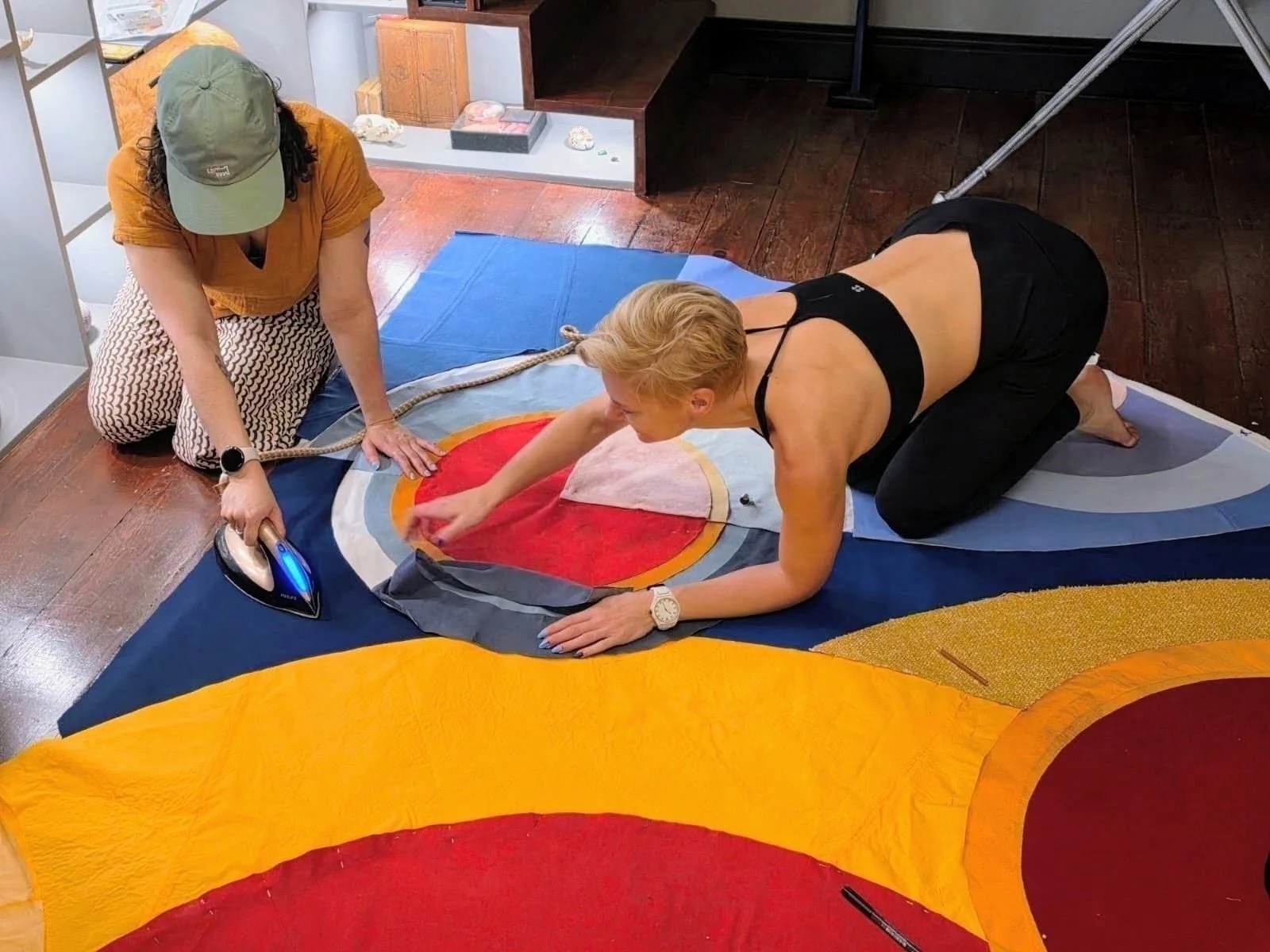
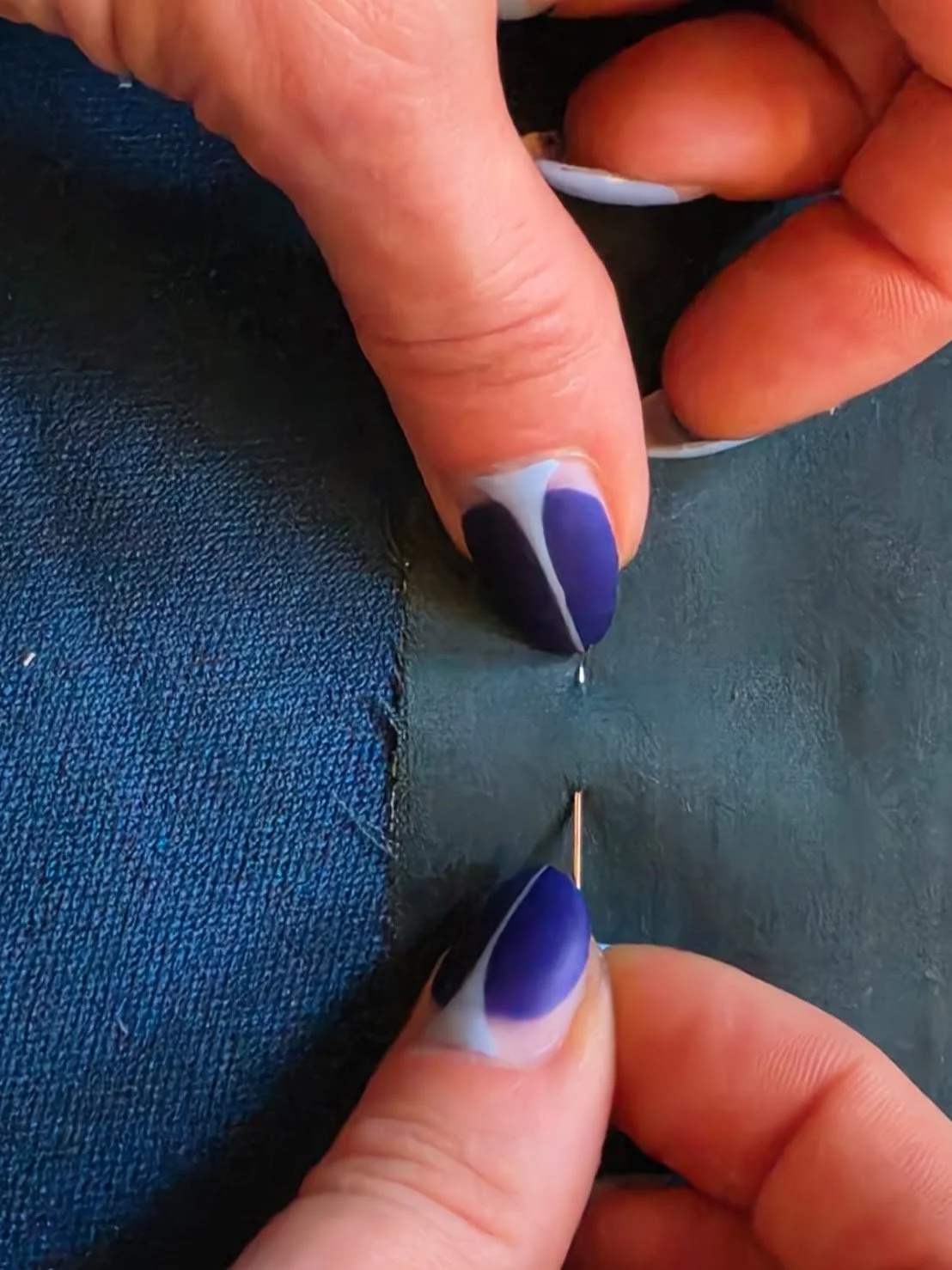
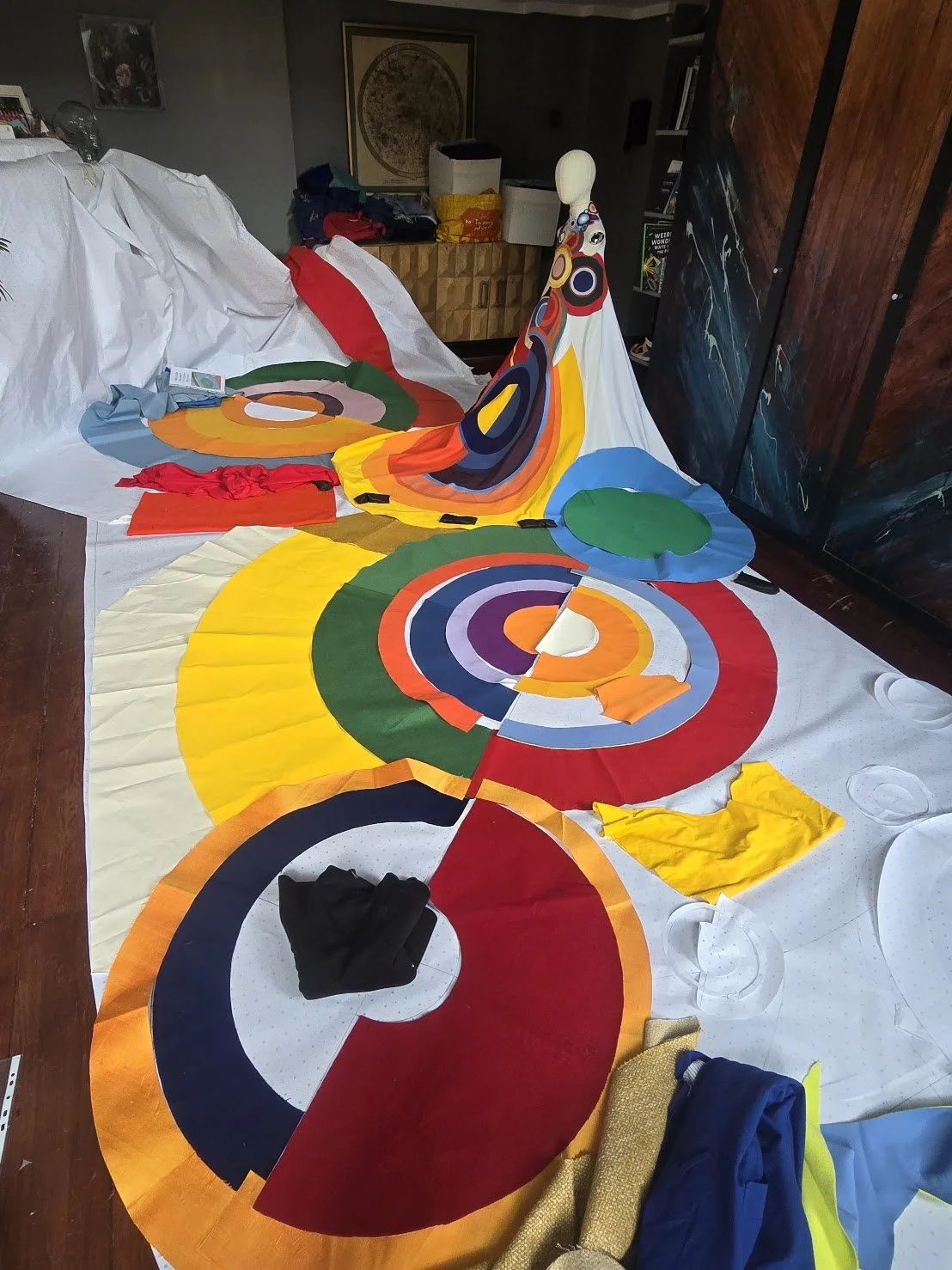
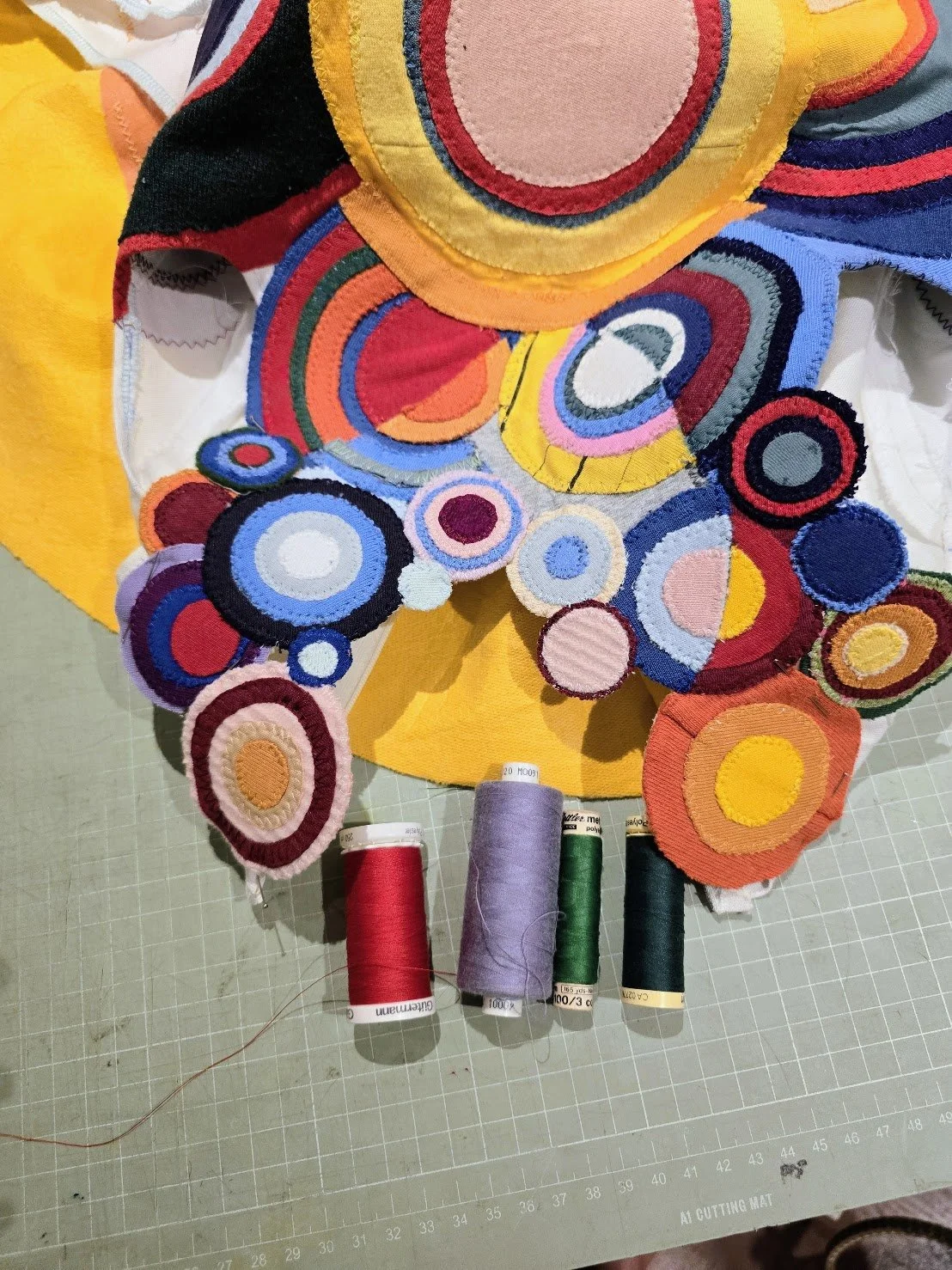
Fabric of Life is built entirely from reclaimed textile waste and broken garments gathered across East London. Since that awakening, I have used my creativity to try to clean up the textile and plastic waste in my beloved London borough, my home of 23 years. This piece is highly personal for me on several levels. In building this installation, I have worked with several other East London female textile artists. Exchanging skill and resources in the process. It is, in a way, a modern continuation of the area’s rich textile history: a rag trade long carried out by immigrant women like ourselves, turning cast-off cloth into a livelihood, community and textile stories worth keeping.
Development
What's shown here is the finished front; its hem currently reads as rectangular, a result of the floor space available during production rather than the final design. The true form is a circle, or oval, whose scale will ultimately be dictated by the room it exhibits in, expanding to fill the space almost edge to edge but leaving only a border between hem and wall for visitors to walk and examine its full circumference, taking in the piece from every angle. The back is a sketched plan, with the next stage of reuse textile colour and stitching still to come, hopefully with funding support.